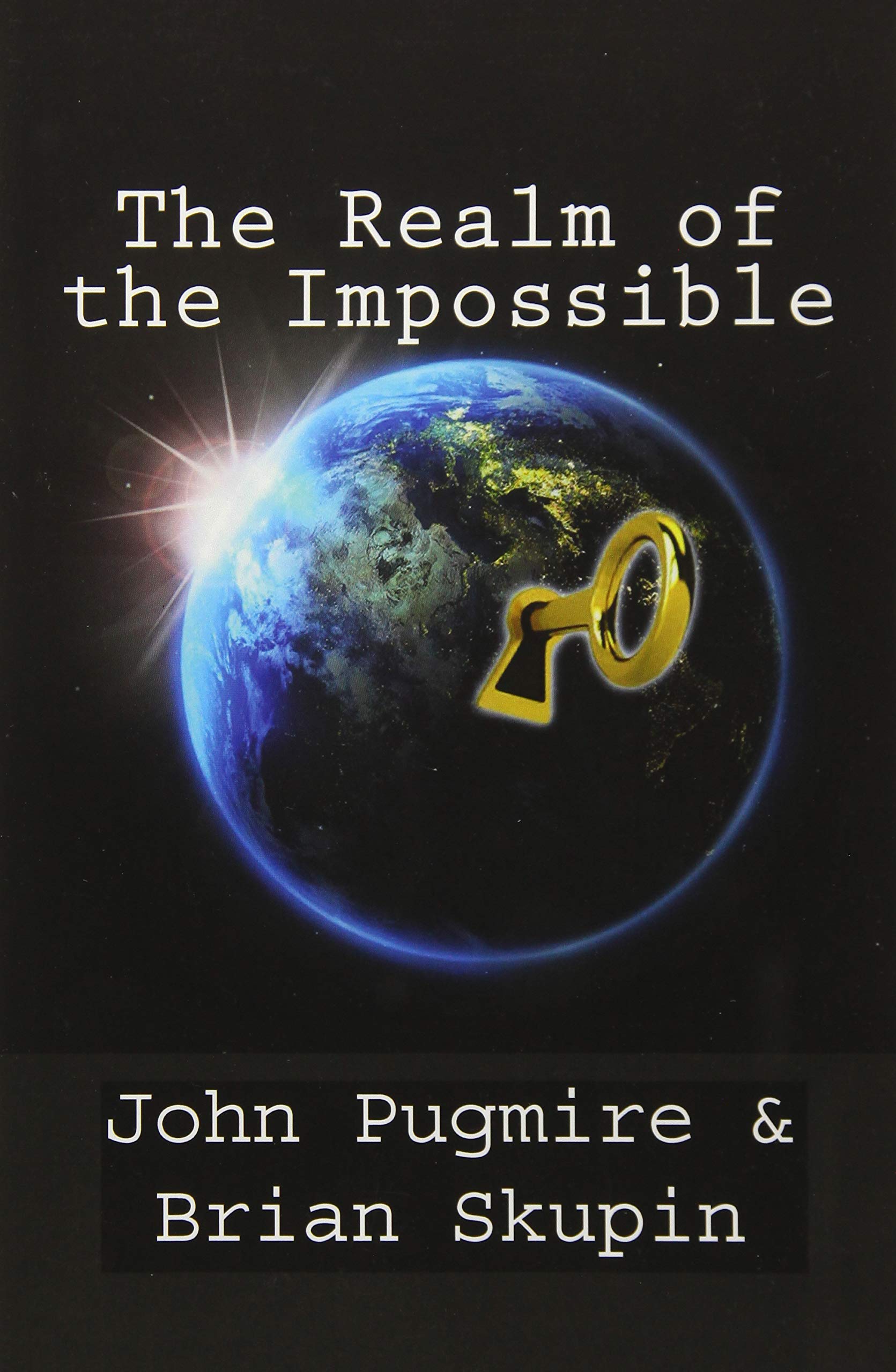
For years now, Locked Room International has been delivering locked rooms from around the world, much to our greedy pleasure. While most of their works have been both novels and from specific countries such as France, The Realm of the Impossible takes a worldwide view and is a pretty solid short story collection. Since this post will be long, I’ll say right now that the collection is very much worth your time even if you don’t care one iota about the idea of foreign locked rooms; most of these stories have not been anthologized so you’re getting some original work from here.
Before I go on, it is fair to note that this collection also has a compilation of 12 real life impossibilities, ranging from the gruesome to the charming to the “I can’t believe that this wasn’t a mystery ploy dumped into reality.” For the sake of space (and because I honestly have little to say) I shall point the reader at JJ’s commentary here. And read his blog (although I can’t imagine someone knowing me but not him!).
First up, we have France’s Paul Halter with “Jacob’s Ladder.” The premise is excellent: a religious fanatic yells about seeing a golden ladder and is shortly after found dead from a high fall, but there’s no place for miles around for him to fall from. Like most of Halter’s short stories, it’s a brilliant problem with a simple yet elegant solution. However, while the problem and solution are solid, the story frays around the edges, with the killer’s frame-up plan betting on the police noticing a certain item and making a very specific leap from said item. Not to mention I can’t see when they could have planted it.
Next up is England, represented by Christianna Brand’s “Cyanide in the Sun.” This story has only been published once before this point, and I can’t really understand why; this is a good little work. A serial killer is operating near a seaside resort, poisoning people with cyanide seemingly at random. A group of guests receive a threatening note and attempt to take measures to ensure their safety, which is about as effective as you would think: a woman dies of cyanide poisoning in spite of every ingredient in her sandwich being fresh, under observation, and none of the suspects having the opportunity to poison them.
It’s honestly very good. Brand is skilled at taking small, seemingly irrelevant facts and making mysteries turn on them. It’s a little rough in places, such as the first note which is never fully motivated, but the story hangs together well. I did figure out the gist of the method, but was still caught off-guard by the ending and by the killer. Excellent story, and it reminds me that I need to (literally) dust off The Spotted Cat and re-read it sometime.
Next we have Ulf Durling representing Sweden with “Windfall.” A local lord dies from what seems to be natural causes and...that's it. I admit I don’t totally understand how this is an impossibility, but. The story is well-done, with a good method of murder and the reason for it, but the whole thing is short-circuited by a twist that, like the literal last-page twist of his novel Hard Cheese (also published by Locked Room International!), renders the whole thing moot. I suppose he’s going for a tragic bent, but it isn’t done with the needed pathos to pull it off.
Also, for some reason the text is larger in this story than in any of the others. Probably just a technical error, but it’s a little distracting.
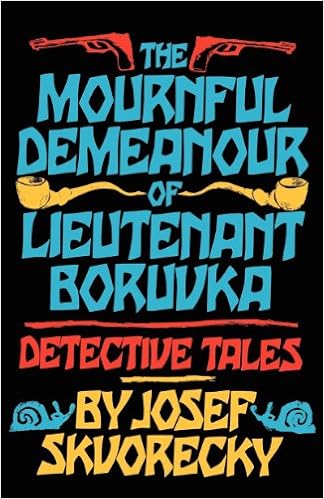
Next up, the Czech Republic. Joseph Skvorecky gives us “The Case of the Horizontal Trajectory,” a story starring Lieutenant Boruvka. The good inspector investigates when an old woman is found stabbed in the eye (!) in her locked bedroom. The killer might have fired it through the open window, but the math doesn’t add up considering the force used. It’s an interesting story, but a little slow. The solution is clever but a bit unnecessarily technical for my tastes.
Next we have Freeman Wills Crofts representing Ireland with “The Mystery of the Sleeping Car Express.” This story is one of his earliest ones; it doesn’t even star Inspector French! The crime is a rather brutal double shooting in a locked train car (in which the door is partially “locked” by one of the bodies!), and the whole thing is quite painstakingly worked out so that every possible option for the killer’s escape is accounted for. It’s all quite fascinating, but marred by the minor fact that if you don’t know the details of train cars at that time you'll be completely lost. I’d like to think I’m not alone in this, since every other review I’ve seen of this story has gone, “Good, but it needed a map.” This is disappointing, since I can’t give a good judgment on if the solution works. But I enjoyed it nonetheless.
Australia’s story is Mary Fortune’s “Dead Man In the Scrub.” Sadly, this is more of a historical curiosity than a full-blown locked room. The opening, in which a highly decayed body is found in a padlocked tent, is effective, but the solution is simple and the killer discovered by dumb luck.
Melville Davisson Post’s “The Hidden Law” is also a curiosity, and also a desperate attempt to not put “The Doomdorf Mystery” into yet another locked room anthology. This is one of Post’s Uncle Abner stories, a preacher who serves as a sort of frontier Father Brown, only much more blunt. He’s been called in to help a miser whose gold is somehow vanishing from his locked house, and somehow and for some reason the thief is returning parts of it. The first half of the story is the best, with the atmosphere of a place on the boundaries of civilization, where belief in witches seems not only plausible, but wise. But the solution falls flat, with a solution that the paranoid miser should have hit on by himself. I did like the answer as to why he felt that he would plunge into Hell if he struck out against the thief after he nearly caught them in the night, and perhaps that aspect could have been drawn out more.
France returns with Alexandre Dumas’s “House Call.” Fans of this author might protest that he has no story by this title. That’s because this story is the result of mashing two chapters from one novel, Les Mohicans de Paris, into one. In fairness, it’s relatively seamless, and I couldn’t pin down any part that seemed out of place. The story itself is about the disappearance of a girl from her locked bedroom, and it’s all investigation. Pure, tedious investigation as the detective marches about with his hanger-ons looking at footprints. It’s quick and can be skimmed, but does fall into that “historical curiosity” category, especially when it comes to some of its conclusions about footprints. But it’s interesting, even if the solution is old hat.
We now move to Argentina for “The Twelve Figures of the World.” The authors are Jorge Luis Borges and Adolfo Bioy Casares, telling one of the tales of Don Isidro Parodi, a man who solves crimes from his prison cell where he’s been rotting since being falsely accused of murder. The “client” is a young man who recounts his being sucked into a cult obsessed with the titular figures, and the bizarre initiation ritual that ended in murder and arson. This was a good story that kept my interest and had a good explanation for everything, but if there was an impossibility I’m afraid I missed it entirely. I think it was something to do with the ritual? But that’s so broad that Parodi’s explanation for it can be argued to be one of many possible answers. Don’t get me wrong, I liked it and thought it was a good example of how to let the biases of a narrator cloud the story and obscure clues (the solitaire!), and I am almost tempted to seek out the other Parodi stories based on it. I just didn’t fully grasp why it was in this collection.
Herodotus’s “Rhampsinitos and the Thief” is Greece’s short, two-page entry. It’s not even really a mystery, more of an account of a young man who robs a “sealed” vault and just goes around outsmarting everyone. Short, but fun.
Next we skip this “Earth” business and head to outer space with Poul Anderson’s “The Martian Crown Jewels.” The titular jewels vanish from an unmanned, remote-controlled ship that’s been drifting in outer space for months. The disappearance threatens relations between Earth and Mars, meaning that the Martian Sherlock Holmes has to be called in. I recall TomCat not caring for this story even if I can’t remember why without checking the post, but I found it a good little story. The setting felt sufficiently “different,” and while my lack of familiarity with sci-fi prevents me from mentioning originality, the world building felt plausible and interesting. The solution is also good, although the key part of it only comes about a page from the solution. I understand the author worrying about giving the plot away early, but it should have been possible to explain what “that thing” was and what it did before the problem was defined.
Dudley Hoys gives us a Lebanese story with “Leaving no Evidence.” It’s not a mystery tale per se, more an adventure yarn where the arrogant Englishman blithely dismisses rumors about the nameless thing that makes men vanish in the snow, only for his travelling companions just to stop existing on a trek. Good story, actually somewhat clued as well. There could have been a little more build-up to the horror and tension, but that’s a minor flaw.
We now go to India with Sharadindu Bandyopadhyay’s “The Venom of the Tarantula.” In one of those coincidences that would never be accepted in fiction, the set-up resembles that of the real-life locked room mystery of actor Lewis Calhern, who managed to get himself drunk in a locked dressing room that had been searched and cleared beforehand. This time the “victim” is a crude old man who spends his days writing the most perverted of dreck while getting high off tarantula venom. But how is he getting access to it? A more minor mystery, but a good one. I suppose it’s not hard to figure out, and it is fairly clued, but I can believe that the family missed it. I liked it, perhaps I could check out more from this series.
We return to the United Kingdom once again for Victor L. Whitechurch’s “Sir Gilbert Murrell’s Picture.” The crime in question is one of the most interesting in mystery fiction: the disappearance of an entire train car from a train in motion. The car also contains the titular picture. It’s short but pleasant, with no real surprise in the game being played but a surprisingly good if mechanical solution. It’s hard to visualize, and you have to take it on faith that the train is moving slow enough to pull it off, but I bought it. On reflection I found it interesting to compare this to Crofts’s story, which should in theory be simpler but is much harder to understand than this.
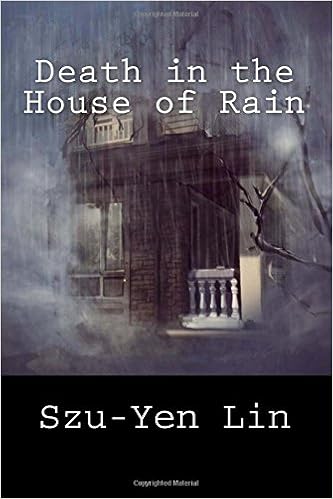 Szu-Yen Lin cheats and gets to be counted as two countries, China and Taiwan, with “The Miracle on Christmas Eve.” The case at hand for once is not a crime, but a Christmas miracle. A man, Ko, comes to Lin’s detective Ruoping Ling for help in explaining a mysterious event that occurred when he was a child. After Ko is mocked by his classmates for his belief in Santa Claus, his father decides to prove his existence in the most dramatic way possible: Ko’s bedroom is searched; the window is locked and taped; the door is locked, taped, and the key is placed under the pillow of the leader of the bullies; everyone sleeps outside the room. And yet, in the night, the sound of a music box draws the children to the room, now with a tree and presents inside! And the shadow of Santa’s sleigh can be seen on the moon...
I like this one. It’s charming and light, and a good mystery besides. The solution is a little simple and might require too many moving parts (this might be due to the over-long explanation), but I liked it; it makes sense. The only bit I didn’t like was the sleigh on the moon; I don’t buy the explanation and it falls into the same trap that Death in the House of Rain did: great explanation at the beginning, then boring, flawed, last-minute impossibility. But more stories like this please!
Alexis Kivi comes to us from Finland with an excerpt from the novel Seven Brothers. This story, which isn’t even two pages, has a man stumble on footprints that turn into the footprints of a fox. A simple answer is provided, but it’s a charming thing. I wonder how the editors discovered it though.
We have a good one up next from Portugal. Afonso Carreiro’s “Lying Dead and Turning Cold” is a tale told by an uncle to his nephew, detailing a murder that occured one cold, snowy night, under the veil of old wives tales and a rumor of a witch. A group of citizens meet in the night to discuss the reappearance of a local cad who’s already left broken hearts in his wake and taken a fair bit of blackmail money. The meeting is tense and eventually one stomps out in fear and finds the body of the cad, strangled to death in the snow, with no other footprints surrounding the body. This is a good one, with good and subtle cluing and excellent atmosphere. It does suffer somewhat from there being a lack of plausible false solutions to the problem, but even then it would take a skilled reader to pick up on the clues, as opposed to just blind guessing.
Next we go to Canada for “The ‘Impossible’ Impossible Crime,” by the not-Canadian Edward D.
Hoch. But he lived in New England and set the story in Canada, so it’s all fine. The story is set in the Canadian wilderness, where two men are cooped up in an isolated cabin while they perform research. Things start well, but the isolation and the fact that one envies the life of the other makes things tense...and then, in the early morning, a gunshot.
One man is dead, the other isn’t the killer. Suicide is impossible, but how could anyone get out to the snow-bound cabin, much less deliver a perfect headshot through frosted glass? It’s a good set-up, but it’s a little dry, Hoch doesn’t really milk the potential horror of the set-up, and after the murder the tension falls a little flat. While I don’t agree with JJ’s idea that the protagonist realizes everything at once, there’s a little technical aspect to the solution and the explanation that dulls the horror of the scenario when the narrator realizes what happened. It’s good, but better is coming...
After the Egypt story! Elizabeth Peters gives us ”The Locked Tomb Mystery.” As the name implies, we have a case of tomb robbery here. When the tomb of an arrogant and emotionally cruel woman is robbed and her mummy is vandalized, it falls to an Egyptian Sherlock Holmes to unravel it, although he doesn’t have to do much; the case is easily resolved. I don’t mind this, since while the solution is in theory simple there are quite a few moving parts to it, and I enjoyed seeing it unfold. It somewhat reminds me of “The Miracle on Christmas Eve,” both in construction and in having a too-long summation. But that story was much more charming than this one I admit.
Next, back to the U.S. for “Deadfall,” Samuel L. Taylor’s contribution. And what a contribution! Two men, Vince and Jim, set off for the wilderness but a deadfall (a log trap) leaves Vince with a broken leg and the two men stranded in a hunter’s cabin. The story is told through diary entries in a journal that Jim discovers, chronicling the lonely days and nights in the cabin. He also talks about the strange, impossible footprints that appear in the snow...
This is very good, well-told and with an intriguing framing device that honestly could have been a tad longer. As is, the shift from penultimate to last entry has one character suddenly reveal things that they learned off-page, and it’s a little jarring. There is a good example of character in one entry, as the writer more or less confirms every negative impression of them without deliberately trying too. A very worthy addition, although one might argue that the plan is a little obscure.
We now move to Japan for Norizuki Rintaro’s “The Lure of the Green Door.” Rintaro’s detective Norizuki Rintaro (again I curse the name of Ellery Queen) is dragged along to negotiate the release of an occult author’s personal library. His wife is dragging her feet on the matter, and while she claims it’s due to her husband’s ghost asking her not to, Norizuki suspects something more sinister. Could it have something to do with the suicide of her husband in his study? Norizuki suspects murder, but one door was bolted from the inside, the window was nailed shut and blocked with a bookcase and the other entrance was the titular green door, which seemingly cannot be opened…
I admit, I wasn’t fond of this story when I first read it, but a re-read improved my opinion a bit. I do think it’s a little hard to fairly clue, but the how of the murder is honestly ingenious, probably original. It’s very well done, and actually manages to be a little light in the writing, as opposed to someone like Keikichi Osaka.
We now go to Italy for Pietro de Palma’s “The Barese Mystery,” which could also be re-titled “Every Locked Room Fan’s Personal Dream Yes Please I Want This.” It was actually written for this collection! The main character is a mystery fan recruited to look into the “suicide” of a count in his locked study, with the privilege of being able to read a lost C. Daly King manuscript as a reward. The mystery is short but good, and while I don’t care for “he shot himself with the wrong hand!” gambit, the rest makes up for it. JJ thinks it isn’t fairly clued, but I think it comes close. And the solution is well-done and concealed. Certainly more practical than the Joseph Commings story that I think it’s referencing.
Next up is another original story, this time from Germany. Jochen Fuseler’s “The Witch Doctor’s Revenge” is a neat little story. Thirteen years ago, two adventurers ran into a small tribe and managed to save the life of the chief’s daughter. The failure of the tribe’s witch doctor resulted in him being hung upside down, but not before he cursed the two adventures to meet their end in thirteen years, one by hanging upside down and the other by vanishing. Cut to the present day, and one calls upon an officer named Faust, as his partner has locked himself in his hotel room in fear and isn’t responding to phone calls. They look through the keyhole (after the key in there is knocked out) and see him hanging upside down. The door is broken down, but the body has vanished.
That was a lot of set-up, but the rest of the story is dedicated to explaining all of this, as well as the sudden disappearance of the other man when our hero turns his back (this part is disappointing). The whole explanation is long, but contains some interesting ideas, especially with how the body disappeared. I also enjoyed the contradiction of the Gregorian calendar, minor though it was. I have seen comments on JJ’s blog that point out a flaw, but it was minor enough that I missed it. Good all around, but the ending is abrupt. And the motive is…let’s just say my first response was something along the lines of, “But there are easier ways of doing that!” and leave it at that. But I’d like to see more from this author. When’s the novel John Pugmire?
Off to Iraq for Charles B. Child’s “All the Birds of the Air.” This time the victim is a judge who
 suffered a blow to the head in his private chambers, which he retreated into to escape the heat. The judge had ruled against a fanatical Islamic sect and was under guard at the time, so how did the killer get in and out? The answer could have been “They got in when the guard was asleep because he totally was,” but instead we have a slightly more complex solution. It’s not much, and honestly was the first thing I thought of when reading. The killer is also a non-entity, I’m pretty sure they don’t even get a speaking part. But it was a light, entertaining read that got a good snapshot of Iraq (I assume anyway, and it was at the time that the author was writing), and I’d be interested in reading his other impossible crime stories (which frankly sound more interesting!)
And now, we move to Ireland once again for a story that was part of A Master of Mysteries, one of the first collections of locked room mysteries: L.T. Meade and Robert Eustace’s “The Warder of the Door.” The story revolves around a creepy underground cell containing a coffin. The father of our hero John Bell’s friend is terrified of old family legends which suggest that the first-born of each family will become the “warder of the door” on their death. It’s getting so bad that he starts telling his son not to bother with this “marriage” thing, while never really explaining why because that might make his son understand or something silly like that.
Turns out that father dear had a bizarre dream which confirmed where the old cell is. This is, oddly enough, not the impossibility of the story, but it does set it up. Bell and his friend track down the cell, and find that the door is one that seems to close on its own...until they remove the coffin inside, causing the door to stay open like the warder is holding it. I think I enjoyed this in spite of myself. It’s a very Victorian melodrama, but I honestly got sucked into things (I seem to enjoy the writing style), and the final sequence is quite tense. The secret behind the door isn't exactly what I was expecting. I don’t deny that it could work, but you kinda have to take it on faith here. But it was a fun story.
We now head back to Japan to wrap this up with Soji Shimada’s “The Locked House of Pythagoras.” An artist and his lover are brutally killed in his home. Oddly, the two are found lying on pictures that the artist was judging for a school competition, in a locked room in a locked house! The only footprints in the mud outside only walk around the house twice, but they belong to the husband of the artist’s lover, so he gets browbeaten into a confession, even though neither he nor the police know how the killings were done. Enter Kiyoshi Mitari, age 8.
Once again, there is little question of “who” but the focus is entirely on the “how.” It’s an interesting “how,” with the layout of the house playing a role in the construction of the crime (if not necessarily the locked room itself). But on the whole I’m a little disappointed. It’s a very technical crime, and the explanation is spread out over so many pages that it’s easy to miss details here and there, which can result in the final solution seeming very muddled. I almost wish that Pugmire and Skupin had gone with “The Executive Who Lost His Mind,” which while very reliant on coincidence and not a straight mystery, is certainly much more interesting!
Like I said at the beginning: this is very much worth your time. It’s a collection of locked room stories from around the world. What more can you want? Not all of them are winners, and some feel like they were just here for historical curiosities’ sake, but very few of these have been collected, and there are many hidden gems in here. It’s honestly great to see all of this here in one place, and I’m looking forward to what LRI does next. Here’s to locked rooms, no matter the nation!
Next up is England, represented by Christianna Brand’s “Cyanide in the Sun.” This story has only been published once before this point, and I can’t really understand why; this is a good little work. A serial killer is operating near a seaside resort, poisoning people with cyanide seemingly at random. A group of guests receive a threatening note and attempt to take measures to ensure their safety, which is about as effective as you would think: a woman dies of cyanide poisoning in spite of every ingredient in her sandwich being fresh, under observation, and none of the suspects having the opportunity to poison them.
It’s honestly very good. Brand is skilled at taking small, seemingly irrelevant facts and making mysteries turn on them. It’s a little rough in places, such as the first note which is never fully motivated, but the story hangs together well. I did figure out the gist of the method, but was still caught off-guard by the ending and by the killer. Excellent story, and it reminds me that I need to (literally) dust off The Spotted Cat and re-read it sometime.
Next we have Ulf Durling representing Sweden with “Windfall.” A local lord dies from what seems to be natural causes and...that's it. I admit I don’t totally understand how this is an impossibility, but. The story is well-done, with a good method of murder and the reason for it, but the whole thing is short-circuited by a twist that, like the literal last-page twist of his novel Hard Cheese (also published by Locked Room International!), renders the whole thing moot. I suppose he’s going for a tragic bent, but it isn’t done with the needed pathos to pull it off.
Also, for some reason the text is larger in this story than in any of the others. Probably just a technical error, but it’s a little distracting.
Next up, the Czech Republic. Joseph Skvorecky gives us “The Case of the Horizontal Trajectory,” a story starring Lieutenant Boruvka. The good inspector investigates when an old woman is found stabbed in the eye (!) in her locked bedroom. The killer might have fired it through the open window, but the math doesn’t add up considering the force used. It’s an interesting story, but a little slow. The solution is clever but a bit unnecessarily technical for my tastes.
Next we have Freeman Wills Crofts representing Ireland with “The Mystery of the Sleeping Car Express.” This story is one of his earliest ones; it doesn’t even star Inspector French! The crime is a rather brutal double shooting in a locked train car (in which the door is partially “locked” by one of the bodies!), and the whole thing is quite painstakingly worked out so that every possible option for the killer’s escape is accounted for. It’s all quite fascinating, but marred by the minor fact that if you don’t know the details of train cars at that time you'll be completely lost. I’d like to think I’m not alone in this, since every other review I’ve seen of this story has gone, “Good, but it needed a map.” This is disappointing, since I can’t give a good judgment on if the solution works. But I enjoyed it nonetheless.
Australia’s story is Mary Fortune’s “Dead Man In the Scrub.” Sadly, this is more of a historical curiosity than a full-blown locked room. The opening, in which a highly decayed body is found in a padlocked tent, is effective, but the solution is simple and the killer discovered by dumb luck.
Melville Davisson Post’s “The Hidden Law” is also a curiosity, and also a desperate attempt to not put “The Doomdorf Mystery” into yet another locked room anthology. This is one of Post’s Uncle Abner stories, a preacher who serves as a sort of frontier Father Brown, only much more blunt. He’s been called in to help a miser whose gold is somehow vanishing from his locked house, and somehow and for some reason the thief is returning parts of it. The first half of the story is the best, with the atmosphere of a place on the boundaries of civilization, where belief in witches seems not only plausible, but wise. But the solution falls flat, with a solution that the paranoid miser should have hit on by himself. I did like the answer as to why he felt that he would plunge into Hell if he struck out against the thief after he nearly caught them in the night, and perhaps that aspect could have been drawn out more.
France returns with Alexandre Dumas’s “House Call.” Fans of this author might protest that he has no story by this title. That’s because this story is the result of mashing two chapters from one novel, Les Mohicans de Paris, into one. In fairness, it’s relatively seamless, and I couldn’t pin down any part that seemed out of place. The story itself is about the disappearance of a girl from her locked bedroom, and it’s all investigation. Pure, tedious investigation as the detective marches about with his hanger-ons looking at footprints. It’s quick and can be skimmed, but does fall into that “historical curiosity” category, especially when it comes to some of its conclusions about footprints. But it’s interesting, even if the solution is old hat.
We now move to Argentina for “The Twelve Figures of the World.” The authors are Jorge Luis Borges and Adolfo Bioy Casares, telling one of the tales of Don Isidro Parodi, a man who solves crimes from his prison cell where he’s been rotting since being falsely accused of murder. The “client” is a young man who recounts his being sucked into a cult obsessed with the titular figures, and the bizarre initiation ritual that ended in murder and arson. This was a good story that kept my interest and had a good explanation for everything, but if there was an impossibility I’m afraid I missed it entirely. I think it was something to do with the ritual? But that’s so broad that Parodi’s explanation for it can be argued to be one of many possible answers. Don’t get me wrong, I liked it and thought it was a good example of how to let the biases of a narrator cloud the story and obscure clues (the solitaire!), and I am almost tempted to seek out the other Parodi stories based on it. I just didn’t fully grasp why it was in this collection.
Herodotus’s “Rhampsinitos and the Thief” is Greece’s short, two-page entry. It’s not even really a mystery, more of an account of a young man who robs a “sealed” vault and just goes around outsmarting everyone. Short, but fun.
Next we skip this “Earth” business and head to outer space with Poul Anderson’s “The Martian Crown Jewels.” The titular jewels vanish from an unmanned, remote-controlled ship that’s been drifting in outer space for months. The disappearance threatens relations between Earth and Mars, meaning that the Martian Sherlock Holmes has to be called in. I recall TomCat not caring for this story even if I can’t remember why without checking the post, but I found it a good little story. The setting felt sufficiently “different,” and while my lack of familiarity with sci-fi prevents me from mentioning originality, the world building felt plausible and interesting. The solution is also good, although the key part of it only comes about a page from the solution. I understand the author worrying about giving the plot away early, but it should have been possible to explain what “that thing” was and what it did before the problem was defined.
Dudley Hoys gives us a Lebanese story with “Leaving no Evidence.” It’s not a mystery tale per se, more an adventure yarn where the arrogant Englishman blithely dismisses rumors about the nameless thing that makes men vanish in the snow, only for his travelling companions just to stop existing on a trek. Good story, actually somewhat clued as well. There could have been a little more build-up to the horror and tension, but that’s a minor flaw.
We now go to India with Sharadindu Bandyopadhyay’s “The Venom of the Tarantula.” In one of those coincidences that would never be accepted in fiction, the set-up resembles that of the real-life locked room mystery of actor Lewis Calhern, who managed to get himself drunk in a locked dressing room that had been searched and cleared beforehand. This time the “victim” is a crude old man who spends his days writing the most perverted of dreck while getting high off tarantula venom. But how is he getting access to it? A more minor mystery, but a good one. I suppose it’s not hard to figure out, and it is fairly clued, but I can believe that the family missed it. I liked it, perhaps I could check out more from this series.
We return to the United Kingdom once again for Victor L. Whitechurch’s “Sir Gilbert Murrell’s Picture.” The crime in question is one of the most interesting in mystery fiction: the disappearance of an entire train car from a train in motion. The car also contains the titular picture. It’s short but pleasant, with no real surprise in the game being played but a surprisingly good if mechanical solution. It’s hard to visualize, and you have to take it on faith that the train is moving slow enough to pull it off, but I bought it. On reflection I found it interesting to compare this to Crofts’s story, which should in theory be simpler but is much harder to understand than this.
I like this one. It’s charming and light, and a good mystery besides. The solution is a little simple and might require too many moving parts (this might be due to the over-long explanation), but I liked it; it makes sense. The only bit I didn’t like was the sleigh on the moon; I don’t buy the explanation and it falls into the same trap that Death in the House of Rain did: great explanation at the beginning, then boring, flawed, last-minute impossibility. But more stories like this please!
Alexis Kivi comes to us from Finland with an excerpt from the novel Seven Brothers. This story, which isn’t even two pages, has a man stumble on footprints that turn into the footprints of a fox. A simple answer is provided, but it’s a charming thing. I wonder how the editors discovered it though.
We have a good one up next from Portugal. Afonso Carreiro’s “Lying Dead and Turning Cold” is a tale told by an uncle to his nephew, detailing a murder that occured one cold, snowy night, under the veil of old wives tales and a rumor of a witch. A group of citizens meet in the night to discuss the reappearance of a local cad who’s already left broken hearts in his wake and taken a fair bit of blackmail money. The meeting is tense and eventually one stomps out in fear and finds the body of the cad, strangled to death in the snow, with no other footprints surrounding the body. This is a good one, with good and subtle cluing and excellent atmosphere. It does suffer somewhat from there being a lack of plausible false solutions to the problem, but even then it would take a skilled reader to pick up on the clues, as opposed to just blind guessing.
Next we go to Canada for “The ‘Impossible’ Impossible Crime,” by the not-Canadian Edward D.
One man is dead, the other isn’t the killer. Suicide is impossible, but how could anyone get out to the snow-bound cabin, much less deliver a perfect headshot through frosted glass? It’s a good set-up, but it’s a little dry, Hoch doesn’t really milk the potential horror of the set-up, and after the murder the tension falls a little flat. While I don’t agree with JJ’s idea that the protagonist realizes everything at once, there’s a little technical aspect to the solution and the explanation that dulls the horror of the scenario when the narrator realizes what happened. It’s good, but better is coming...
After the Egypt story! Elizabeth Peters gives us ”The Locked Tomb Mystery.” As the name implies, we have a case of tomb robbery here. When the tomb of an arrogant and emotionally cruel woman is robbed and her mummy is vandalized, it falls to an Egyptian Sherlock Holmes to unravel it, although he doesn’t have to do much; the case is easily resolved. I don’t mind this, since while the solution is in theory simple there are quite a few moving parts to it, and I enjoyed seeing it unfold. It somewhat reminds me of “The Miracle on Christmas Eve,” both in construction and in having a too-long summation. But that story was much more charming than this one I admit.
Next, back to the U.S. for “Deadfall,” Samuel L. Taylor’s contribution. And what a contribution! Two men, Vince and Jim, set off for the wilderness but a deadfall (a log trap) leaves Vince with a broken leg and the two men stranded in a hunter’s cabin. The story is told through diary entries in a journal that Jim discovers, chronicling the lonely days and nights in the cabin. He also talks about the strange, impossible footprints that appear in the snow...
This is very good, well-told and with an intriguing framing device that honestly could have been a tad longer. As is, the shift from penultimate to last entry has one character suddenly reveal things that they learned off-page, and it’s a little jarring. There is a good example of character in one entry, as the writer more or less confirms every negative impression of them without deliberately trying too. A very worthy addition, although one might argue that the plan is a little obscure.
We now move to Japan for Norizuki Rintaro’s “The Lure of the Green Door.” Rintaro’s detective Norizuki Rintaro (again I curse the name of Ellery Queen) is dragged along to negotiate the release of an occult author’s personal library. His wife is dragging her feet on the matter, and while she claims it’s due to her husband’s ghost asking her not to, Norizuki suspects something more sinister. Could it have something to do with the suicide of her husband in his study? Norizuki suspects murder, but one door was bolted from the inside, the window was nailed shut and blocked with a bookcase and the other entrance was the titular green door, which seemingly cannot be opened…
I admit, I wasn’t fond of this story when I first read it, but a re-read improved my opinion a bit. I do think it’s a little hard to fairly clue, but the how of the murder is honestly ingenious, probably original. It’s very well done, and actually manages to be a little light in the writing, as opposed to someone like Keikichi Osaka.
We now go to Italy for Pietro de Palma’s “The Barese Mystery,” which could also be re-titled “Every Locked Room Fan’s Personal Dream Yes Please I Want This.” It was actually written for this collection! The main character is a mystery fan recruited to look into the “suicide” of a count in his locked study, with the privilege of being able to read a lost C. Daly King manuscript as a reward. The mystery is short but good, and while I don’t care for “he shot himself with the wrong hand!” gambit, the rest makes up for it. JJ thinks it isn’t fairly clued, but I think it comes close. And the solution is well-done and concealed. Certainly more practical than the Joseph Commings story that I think it’s referencing.
Next up is another original story, this time from Germany. Jochen Fuseler’s “The Witch Doctor’s Revenge” is a neat little story. Thirteen years ago, two adventurers ran into a small tribe and managed to save the life of the chief’s daughter. The failure of the tribe’s witch doctor resulted in him being hung upside down, but not before he cursed the two adventures to meet their end in thirteen years, one by hanging upside down and the other by vanishing. Cut to the present day, and one calls upon an officer named Faust, as his partner has locked himself in his hotel room in fear and isn’t responding to phone calls. They look through the keyhole (after the key in there is knocked out) and see him hanging upside down. The door is broken down, but the body has vanished.
That was a lot of set-up, but the rest of the story is dedicated to explaining all of this, as well as the sudden disappearance of the other man when our hero turns his back (this part is disappointing). The whole explanation is long, but contains some interesting ideas, especially with how the body disappeared. I also enjoyed the contradiction of the Gregorian calendar, minor though it was. I have seen comments on JJ’s blog that point out a flaw, but it was minor enough that I missed it. Good all around, but the ending is abrupt. And the motive is…let’s just say my first response was something along the lines of, “But there are easier ways of doing that!” and leave it at that. But I’d like to see more from this author. When’s the novel John Pugmire?
Off to Iraq for Charles B. Child’s “All the Birds of the Air.” This time the victim is a judge who
suffered a blow to the head in his private chambers, which he retreated into to escape the heat. The judge had ruled against a fanatical Islamic sect and was under guard at the time, so how did the killer get in and out? The answer could have been “They got in when the guard was asleep because he totally was,” but instead we have a slightly more complex solution. It’s not much, and honestly was the first thing I thought of when reading. The killer is also a non-entity, I’m pretty sure they don’t even get a speaking part. But it was a light, entertaining read that got a good snapshot of Iraq (I assume anyway, and it was at the time that the author was writing), and I’d be interested in reading his other impossible crime stories (which frankly sound more interesting!)And now, we move to Ireland once again for a story that was part of A Master of Mysteries, one of the first collections of locked room mysteries: L.T. Meade and Robert Eustace’s “The Warder of the Door.” The story revolves around a creepy underground cell containing a coffin. The father of our hero John Bell’s friend is terrified of old family legends which suggest that the first-born of each family will become the “warder of the door” on their death. It’s getting so bad that he starts telling his son not to bother with this “marriage” thing, while never really explaining why because that might make his son understand or something silly like that.
Turns out that father dear had a bizarre dream which confirmed where the old cell is. This is, oddly enough, not the impossibility of the story, but it does set it up. Bell and his friend track down the cell, and find that the door is one that seems to close on its own...until they remove the coffin inside, causing the door to stay open like the warder is holding it. I think I enjoyed this in spite of myself. It’s a very Victorian melodrama, but I honestly got sucked into things (I seem to enjoy the writing style), and the final sequence is quite tense. The secret behind the door isn't exactly what I was expecting. I don’t deny that it could work, but you kinda have to take it on faith here. But it was a fun story.
We now head back to Japan to wrap this up with Soji Shimada’s “The Locked House of Pythagoras.” An artist and his lover are brutally killed in his home. Oddly, the two are found lying on pictures that the artist was judging for a school competition, in a locked room in a locked house! The only footprints in the mud outside only walk around the house twice, but they belong to the husband of the artist’s lover, so he gets browbeaten into a confession, even though neither he nor the police know how the killings were done. Enter Kiyoshi Mitari, age 8.
Once again, there is little question of “who” but the focus is entirely on the “how.” It’s an interesting “how,” with the layout of the house playing a role in the construction of the crime (if not necessarily the locked room itself). But on the whole I’m a little disappointed. It’s a very technical crime, and the explanation is spread out over so many pages that it’s easy to miss details here and there, which can result in the final solution seeming very muddled. I almost wish that Pugmire and Skupin had gone with “The Executive Who Lost His Mind,” which while very reliant on coincidence and not a straight mystery, is certainly much more interesting!
Like I said at the beginning: this is very much worth your time. It’s a collection of locked room stories from around the world. What more can you want? Not all of them are winners, and some feel like they were just here for historical curiosities’ sake, but very few of these have been collected, and there are many hidden gems in here. It’s honestly great to see all of this here in one place, and I’m looking forward to what LRI does next. Here’s to locked rooms, no matter the nation!